Podcast: Play in new window | Download
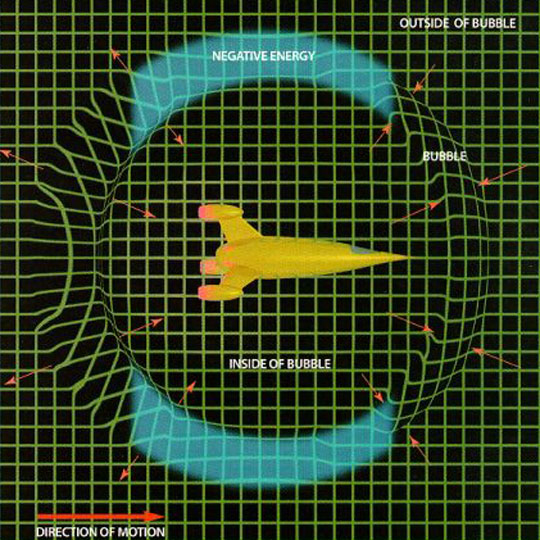
In episode 9, Its back to the A team (which stands for Apple, which points to “g”, cuz their words have weight!) with Jocelyn Read and Dave Tsang! Today We’re talking about the Alcubierre Warp Drive. You’ve probably heard of this before, There’s a lot of buzz on this topic. Oh, we definitely brought our Bee game to this episode!
To help keep us in line and on time, we’ve invited Zach Weinersmith from Saturday Morning Breakfast Cereal and our sister podcast: The Weekly Weinersmith. It’s lively and fun, so Sit Down in your seat, turn up the podcast, pay attention, and bee hive yourself.
Note: There’s some Extra bits after the end music. Two extra bits actually. There was a third very long conversation about bees, but It didn’t make the cut.
Guest: Zach Weinersmith
Physicists: Jocelyn Read, Dave Tsang
Intro Music: Ted Leo and the Pharmacists
Exit Music: John Vanderslice


This discussion was awesome! Fascinating stuff. I’m a big fan of Zach’s and SMBC (where I came across the link to this podcast) and I’ll likely be back to check out more episodes. Now to start harvesting some negative energy from those emo teenagers…
yaaaay.
Alternative title: “Fun and Science with Bubble Warp”!
More bees? I thought everything was going to be expressed in terms of speed boats.
Jocelyn, you’re such a heart-breaker. I’ll bet that poor guy never recovered.
Jocelyn is awesome. That is all. So is Dr. Dave because he brings up the Honey Badger.
It’s bees all the way down.
http://i.imgur.com/DsXYT.jpg BEES!!!
Also, the books go kind of ‘out there’ at times, but I’d suggest reading Travis S. Taylor’s “Warp Speed” and “The Quantum Connection”. In those books they discuss FTL travel via Alcubierre drive powered by the Casimir effect. Something they also talk about in the books are devices that compress space into a small size, around the Planck length if viewed from the outside; however, much, much larger inside. So it could be possible to construct the tiny drive within that compressed space, that only has to effect a very small space. Something like that.
Re: “Cooking”. What if you just turned it off once in a while? To prevent the accumulation of radiation? What about the sides of the bubble? Can photons escape through the sides? If so, could you build “sinks” around the sides of the bubble, to conduct radiation to the outside?
Also, if I understand correctly, the random particles would show up and get “stuck” at the front, but not the back, right?
Haha! nobody knows! (no one has done that calculation yet)
Pingback: Episode 126 | Science Chronicles | Science... sort of
I love this team and the shows! thanks for exercising my brain (:-)<3
Hey Guys! Listening to Episode 9, you over and over interrupt, overtalk, and ignore Jocelyn Read.
Stop being rude!
Hey lesle.
this note isn’t to justify interrupting and talking over jocelyn. I probably do it… a lot. and you are right, it is rude.
this is just to say that *after* we’ve finished talking, i edit the episode, cutting out as much of the *ums* and the breaks in conversation, and sometimes entire bits of conversation. so. in reality, we’re not quite that rude to each other.
ben
Noted. Thanks for reply and for listening.
thanks for telling me.
Warp Drive is plainly possible to be done with phased standing waves.
http://www.youtube.com/watch?v=sgAwyr5Udzw
after reviewing the video, i don’t think it will work as a propulsion device.
if they ask for your money, don’t give it to them.
Interesting stuff. I dont think the most current theory that has been brought to light was discussed. I wonder if it would change anyone’s mind on how it would work?
I would also like to know what would happen if two of these bubbles collided, what would happen? Are they capable of overlapping? If so what happens to the space between the two areas?
Great site. Very interesting and useful information. Keep it coming
My friend sent me this article today about a variant of this warp drive that would require much less energy. In fact it says here that it could be powered by a mass smaller than that of the Voyager 1 spacecraft. If you have the time to read it, please let me know what you think Ben. If you’ve already addressed this elsewhere, could you please refer me to it so I can respond to my friend? Thanks!
http://io9.com/5963263/how-nasa-will-build-its-very-first-warp-drive
By the way, I love the show!
yeah, the whole “use less mass than voyager 1″ is probably true. i have no doubt that tinkering with the geometry would do it.
the problem is the negative energy itself. there is only one candidate for it, the casimir effect, and it comes from quantum mechanics, and as far as i understand it, no one has ever shown that the casimir effect actually has negative gravitational mass.
i should do a show on the casimir effect. i should also look up the spelling.
Thanks, keep up the good work!