Episode 32: Sailors take warning with Reuben and Steve van Breda

So. Why is the Sky blue? Do you know the answer? Do You? Are you sure? Could you explain it to a 10 year old kid? No? Well then have a listen!

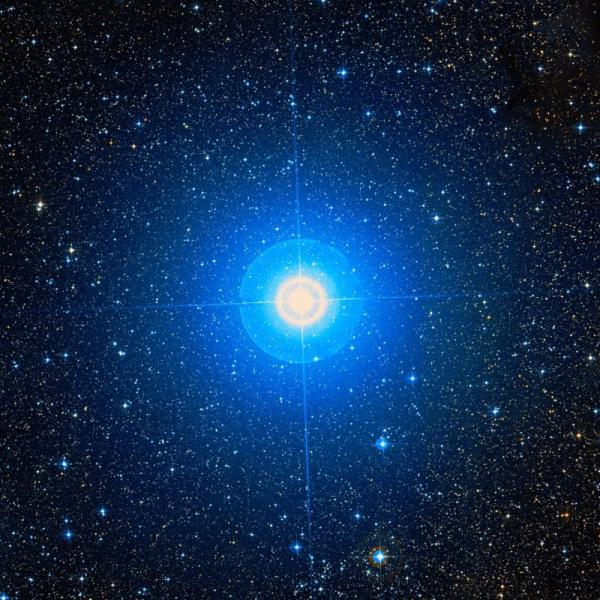
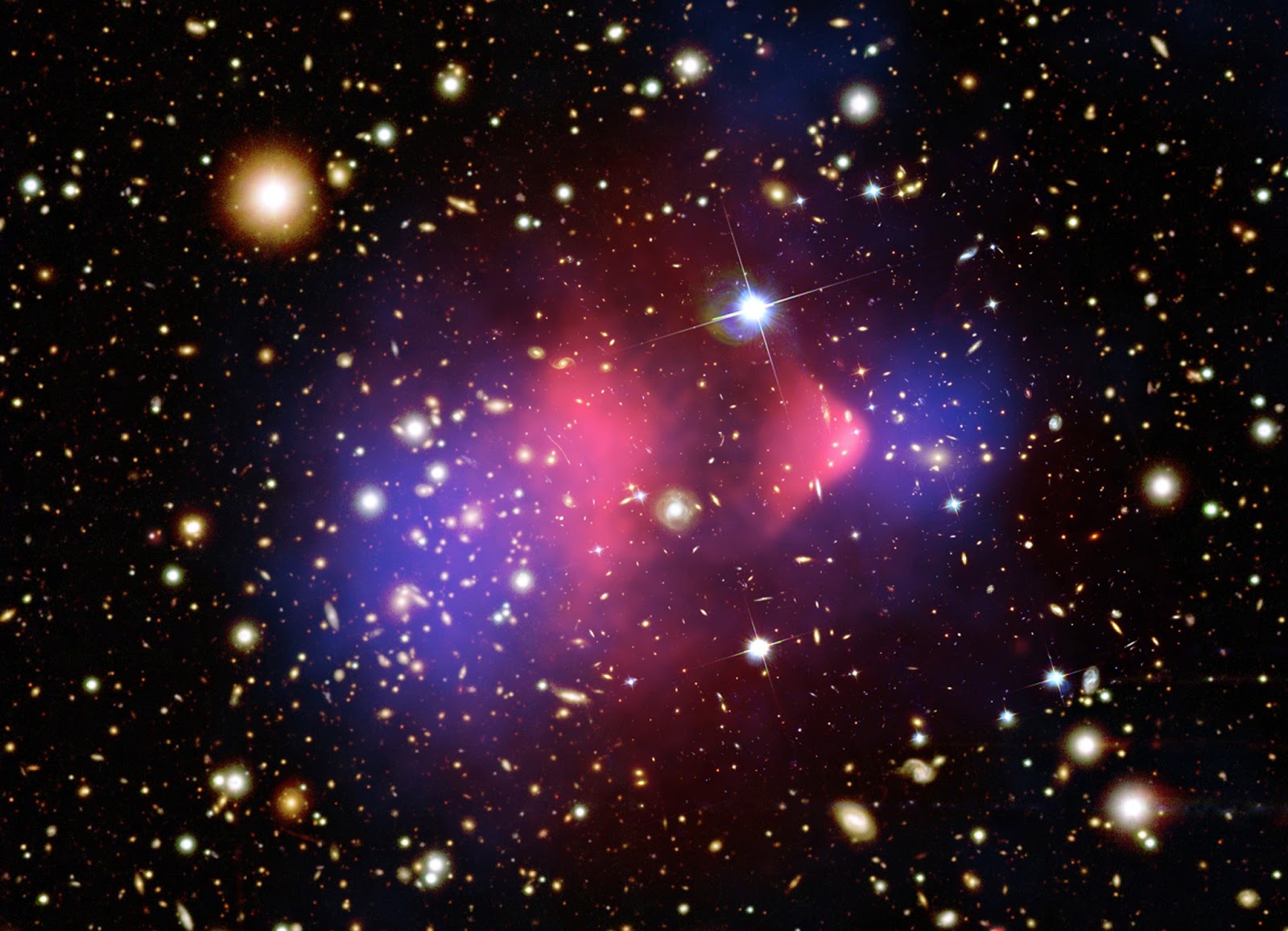
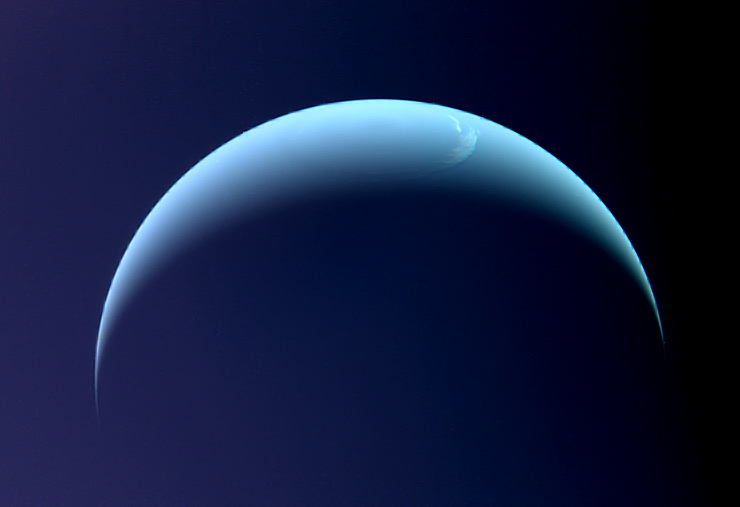
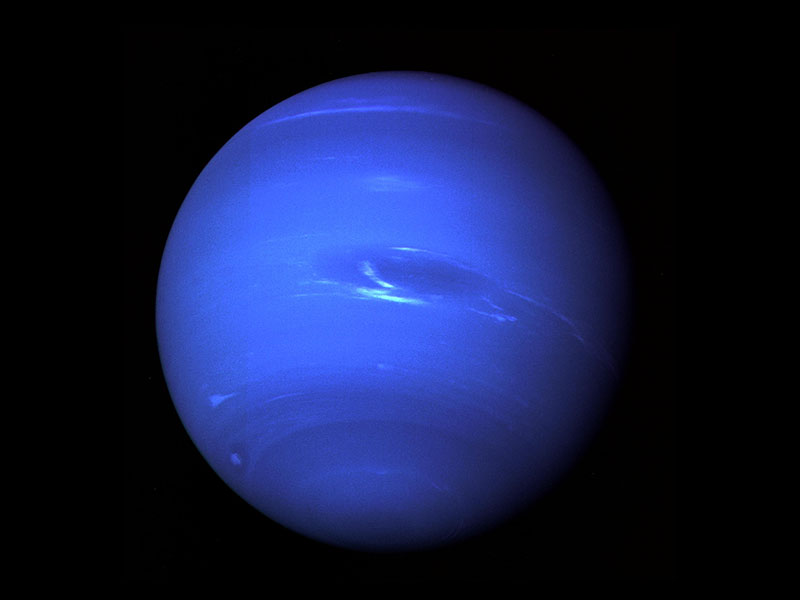
Reuben and his dad Steve are our guests this week and we explain why the sky is blue. we have SUPER FUN! We talk about why the sky is blue, and what skies on other planets would look like… also… how 3-d glasses work.

Amanda Bauer (astropixie) is one of our experts! Ken Clark is the other. But we lost ken midway through the episode. :( I’m sorry, Ken.

Physicists: Amanda Bauer, Ken Clark

Intro Music: Ted Leo and the Pharmacists 

Exit Music: John Vanderslice 

Episode 31: Pushing Mirrors with Megan Harns

Bruce lee performing experiments on the Cassimir Effect.

What happens when you take two mirrors and point them at each other? well, yes. infinity mirrors… Maybe some Kung-Fu.

but. If it’s cold enough, and dark enough, and there’s nothing else around it… the mirrors will SQUISH TOGETHER. I know, right?!?

The Vacuum between the mirrors is different from the vacuum outside them, and the difference sucks them together.

It’s called the Casimir Effect.

You can use it to build warp drives.

This week we’ve brought Megan Harns on, and she’s so clever! Quick. Like a Bunny!

Physicists: Tia Miceli, Mike Zemcov

Intro Music: Ted Leo and the Pharmacists 

Exit Music: John Vanderslice 

Episode 30: Subtle Pursuits with Gareth L Powell

particles moving through a cloud chamber leave trails!

Think of particle physics. It’s a rather popular field… and yet, It is concerned with objects which are too small to touch and too small to see. So. How is it done?

The answer is particle detectors: special machines we’ve built which allow us to amplify the effect of a particle on the world around it.

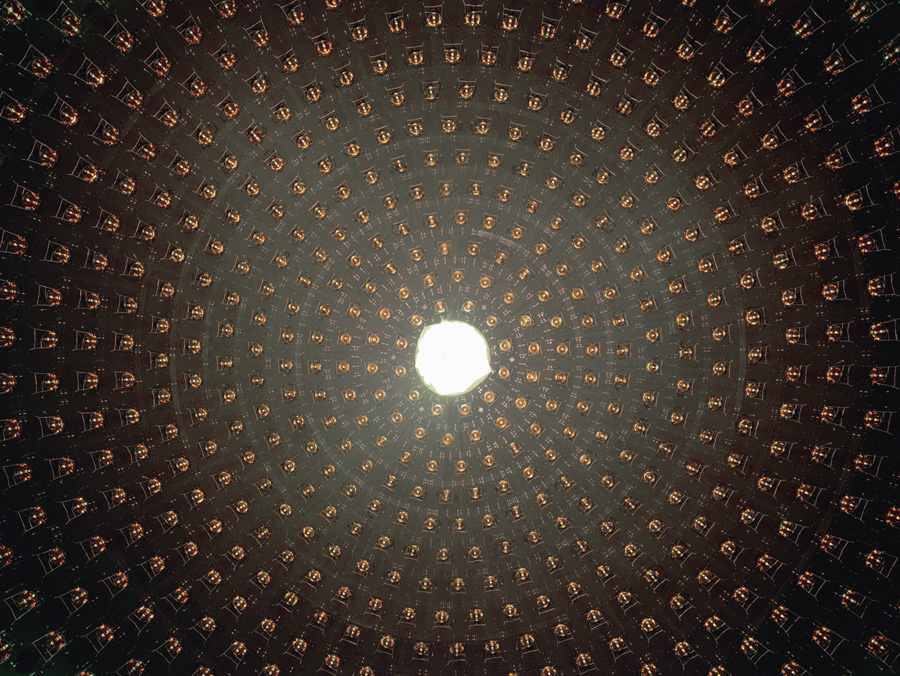
This show, we’re introducing a bunch of different particle detectors, from Geiger counters, to cloud and bubble chambers, to scintillators and CCD’s. We even talk about Photomultipliers and the tragedy at Super K.

This is what the inside of the Super Kamiokande Detector looks like. each ball is a photomultiplier. also, dudes in a canoe.

We wrap it up with a description of the ATLAS detector at CERN. Life is really fun, and this is one of the best shows we have recorded to date. WOOOOOOO!

This week’s guest is Gareth L. Powell, author of the Hit novel Ack-Ack Macaque, which is a story about a hard-boiled monkey who shoots people with his guns, and gets in monkey knife-fights, and there are other characters but there needn’t be. The monkey also flies a fighter jet. And he smokes a Cigar. And he is on twitter. 

Physicists: Tia Miceli, Ken Clark

Intro Music: Ted Leo and the Pharmacists 

Exit Music: John Vanderslice 

Episode 29: Dark Equivalence with Alasdair Stuart

Do you remember where you were on the night when Danny Devito  hugged his twin brother Arnold Schwarzenegger goodbye, climbed into to super-rocket, and departed for alpha centauri? Do you remember what you were doing when you heard, so many decades later, that he had returned? and do you remember seeing the photos of the reunited twins in the newspapers the next day? How old Arnold looked, while Danny  Devito hadn’t aged more than a few months? Remember how sad the two men looked next to each other: one shrunken with age, and the other also quite short?

This week, we are talking about time and black holes. About drinking alone in dark rooms. About how there’s no difference between falling and floating. About lonely twin brothers, displaced in time from one-another. about how GPS works.

This week our guest is Alasdair Stuart, a man of letters. You might recognize Alasdair as the host of the pseudopod podcast, wherein horror stories are read aloud by talented people (who can somehow abstain from doing bad impressions of bela lugosi the whole time). Alasdair has compiled his essays from pseudopod, and has published them as a collection. I am a big fan of these essays, and Alasdair is a  super cool guy.

This weeks episode is one of the best we’ve recorded so far. It’s a fun topic with fun people. listen past the end song to hear a conversation where we explain general relativity to Alasdair. OH! FUN!

Physicists: Dave Tsang, Jocelyn Read

Intro Music: Ted Leo and the Pharmacists 

Exit Music: John Vanderslice 


Episode 28: Smoke Like Swirls on the Moon with Jordan Harbringer

this is what a swirl looks like.


Dear Sir,

This letter is to inform you that there are swirls on our moon. I do not know how they got there. We can tell how old a feature on the moon is based on how weathered the regolith is, and the swirls are not weathered at all. Does this mean that they are brand new? Perhaps they are very old. Also, they are correlated with magnetic anomalies on the lunar surface. I stated, when we placed our order, that we wanted a moon which had no magnetic field.

Please Explain yourself, or provide us with a refund,

-Barn the Bunny.

Dear Shed Rabbit,

Thank you for you interest in our products. As we told you when you placed your order, we offer no guarantee as to the quality of our merchandise. We will not refund any of your money.

If you would like a coherent explanation for the swirls on your moon, please listen to the attached audio file. Jordan Harbinger, host of the art of charm , asks Dr. Cathernine Neish and Dr. Sebastien Besse all about them.

Good luck with your rice-cake hammering.

-Moon company.

Physicists: Catherine Neish, Sebastien Besse

Intro Music: Ted Leo and the Pharmacists 

Exit Music: John Vanderslice 

Episode 27: Death and Heat Death with Cory Doctorow

Okay So. 

Entropy.

It’s this super-popular idea (which is good) which is often misunderstood (which is bad). It’s the reason an icecube melts in a glass of warm water. It’s the reason you can’t get an engine which is 100% efficient.

Our guest today is the author, blogger, and Wikipedia article subject Cory Doctorow. I got him onto the show by promising that I could explain death to his child. He did not realize two things: 1. you should not ever let me explain anything to your children, 2. I would spend most of the time explaining thermodynamics.

anyway, it’s a lovely show!  If you listen past the end music, you’ll hear us trying to tell him how to explain death to a child.

Physicists: Jocelyn Read, Miles Steininger

Intro Music: Ted Leo and the Pharmacists 

Exit Music: John Vanderslice 

P.S.
Cory asks an interesting question during the show, and only as I edited the show did I realize that it’s got a really pertinent answer. He asked us how evaporative cooling works. the answer is: Entropy and statistical mechanics. I don’t know why i forgot  to tell him. anyway, here’s how it works (copied and pasted from an email I wrote. forgive the punctuation)

Imagine that you have a brick, and it’s 50 degrees C, and you pour some water on it, so the water temperature is 50 degrees C.

here’s where statistical mechanics and entropy come in.

the description of the water being 50C is NOT a description of the energy of each and every molecule in the body of liquid. it’s the average energy. So, among the molecules composing the puddle of water, some have an energy above 50C, some will have an energy lower than 50C. Indeed, some will even have an energy above 100C.

If those particular molecules are near the surface of the puddle, they can break away and turn into vapour.

so a body of water will always have SOME molecules which are evaporating away from it, even if the temperature is well below the boiling temperature.

So, because the temperature of the puddle is the average energy of the molecules, when the high energy molecules leave, the average energy decreases.

Like a rich person taking their money and moving it into the bahamas or something.

incidentally, a puddle of water in a closed room will usually reach an equilibrium. just as some water will evaporate, some of the water vapour will be statistically cold enough to condense.

so a puddle of water will cool until there’s enough vapour above it to make an equilibrium.

so what happens if you put a fan up to a puddle of water?

by blowing fresh air over the water (or the kid who just got out of the pool) you’re keeping the water from being in equilibrium with the air around it, and the puddle of water will just keep cooling due to statistical evaporation.


Episode 26: Black Gold with Kai Nagata

You can get a lot of energy by throwing a duck into a black hole.

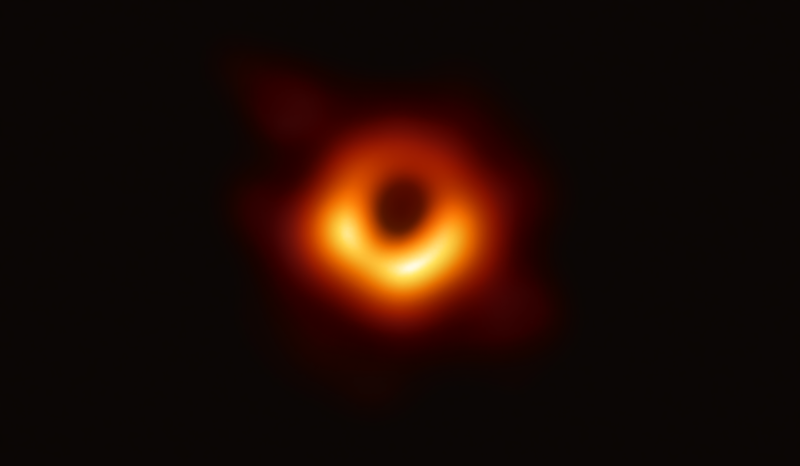
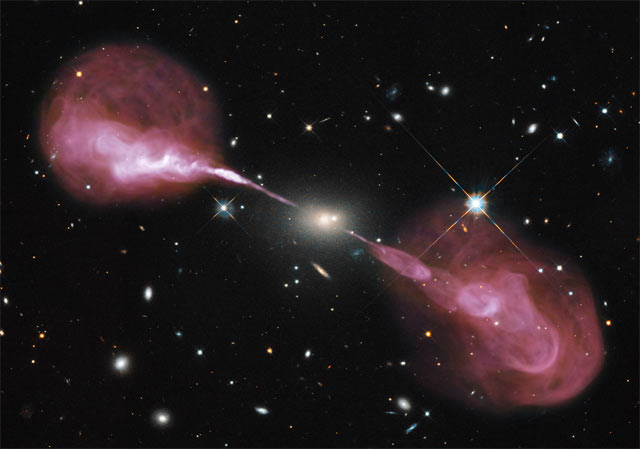
the Active Galactic Nucleus of galaxy Hercules A. the mightiest galaxy, evidently. Spoiler alert, but the thing causing the energetic plumes? it's a black hole.

A LOT.

You might be incredulous when I tell you that this is true.

that’s what we explore today, by the way.

and to help us sort things out, I’ve invited Kai Nagata back to the show. He’s an expert on sacrificing ducks to get energy.

Incidentally, three things are notable in this episode.

1) Kai’s internet kept shutting off skype. thus, conversation is not as wild as it aught to be. we edited it, so you can’t really tell. but I CAN TELL.

2) Listen after the end to hear an extended conversation about whether an infinite amount of free energy would be a good thing. WHO KNOWS?!?

3) This week’s episode was edited, cleaned up, and made listenable by John Heath. John volunteered to help us, and he has done such a great job. it sounds so good. If you are impressed, email barn@titaniumphysics.com, and i’ll pass on your glowing remarks.

Physicists: Laura Hainline, Mike Zemcov

Intro Music: Ted Leo and the Pharmacists 

Exit Music: John Vanderslice 

Episode 25: The No Bear Theorem with Anne Casselman

Well, after the time I took off to write about Cthulhu, I decided to call this episode the start of season 2. It’s been about a year since our first episode was recorded, after all. I made a new intro, too.

After we recorded this episode, jocelyn and dave and I had a bear drawing contest, and jocelyn won. Hey Everyone, it's MEATBALLS!

Today’s topic is lovely. We talk about throwing crap into black holes, one of my favourite topics because I don’t need to do any prep. Also because I love black holes.

Anyway, today our guest is Anne Casselman, the science writer! we are excited to have her on. When I suggested the topic, she said “… And answer the question that keeps me up at night? Yes please! ”

So this week we’re throwing bears at black holes.

Listen through past the end. we talk about a lot of different black hole things after the credits including the no hair theorem, black hole evaporation and uh… what to name the bear.

Physicists: Jocelyn Read, David Tsang

Intro Music: Ted Leo and the Pharmacists 

Exit Music: John Vanderslice 

Iä! Iä! Cthulhu Fhtagn

Hello.

The Spooky season is upon us.

Based upon some bragging I did on the brachioboard this spring, and some goading encouragement by dave and jocelyn, I came up with a unified theory of Cthulhu.

People like it when you call your thoughts a “unified theory”.

Anyway.

I wrote a paper. 

It’s based off of HP Lovecraft’s story “the call of Cthulhu” (listen here)

specifically,  i was able to describe all of the crazy things which the sailor Johansen sees upon the corpse city of R’lyeh using my mad general relativity skills.

I even did some computing and rendered (not drew. RENDERED) a picture of how the island would look bonkers because of gravitational lensing. @_@

but heres the thing…

In proving the Johansen wasn’t crazy I accidentally figure out that cthulhu is probably real, responsible for the island… and I also figure out what he’s doing down there. Of course, as a brave man of science, i can’t go and admit that Cthulhu exists… but you can tell…

Anyway. It’s wonderful and all general relativity.

I’m putting it on the arxiv as we speak, so it should be making weird waves in a day. but in case power goes out or something, I thought i’d tell the podcast about it.

it’s currently on the Arxiv. so you can go there to download it if you want.

Arxiv Version

Episode 24: Higgs In A Blanket with Greg Proops


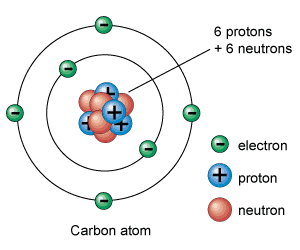
Apparently electrons (and other massive particles) look like Margaret Tatcher. that could be why they are so negative.

Wheee! It’s time to talk about the Higgs field. Okay. So. How is it that this Higgs Field giveseverything mass? Why do we care?

That’s what we’re going to talk about today, it’s kind of a primer.

Our guest today is well known for his cleverness. It’s Greg Proops, The Smartest Man In The World.  When I was planning the show, I told Fiona that we were having the smartest man in the world on as a guest and she was all like “Oh, Ed Witten? Yeah I’ve met him”. Oh, Fiona.

Anyway, this episode is fun. It has kids on bicycles going to visit the Johnson’s house. Also,  fat people who are not reliable messengers. Some of the metaphors are weak.  But I digress.

Listen past the end credits to hear some delightful outtakes.

(FYI, the date we could not remember in the first outtake was actually in the 1930′s. OOPS!)

Physicists: Tia Miceli, Matt Buckley

Intro Music: Ted Leo and the Pharmacists 

Exit Music: John Vanderslice 

(errata. oh hey, apparently there was an american version of Whose Line Is It Anyway which was on the air WAY PAST THE 90′s! TV ignorance is the price I payed to go to grad school. Oh well, you’re still old, everyone in north america on average)